

For most people comparing nutrient-dense coverage, Needed Prenatal Multivitamin is the stronger pick if you want fuller dosing across many vitamins. Ritual Essential Prenatal suits people with a solid diet who want a minimalist, easy-to-tolerate capsule, while Perelel Trimester packs fit those who prefer dosing that shifts across pregnancy stages. Professional guidance still recommends checking your choice against bloodwork and your clinician’s advice, since prenatal supplements are widely recommended but not interchangeable.
TL;DR:
- Pregnancy’s folate RDA is 600 mcg DFE, while guidance recommends 400 to 800 mcg of folic acid before conception and early in pregnancy.
- Ask your clinician to check ferritin and hemoglobin before choosing a dose; Needed sells iron separately, so later low results may require supplementation.
- Choline’s pregnancy adequate intake is 450 mg daily, and many prenatal formulas and diets fall short, so assess food intake before adding a supplement.
- Choose Perelel’s trimester packs if you want doses to change with pregnancy stage; Needed and Ritual keep their formulas constant throughout all three trimesters.
- Separate iron from calcium, coffee, and levothyroxine by several hours, and tell your prescriber about every supplement to check interactions and combined doses.
Table of Contents
- Comparing Needed, Ritual, and Perelel Nutrient by Nutrient
- How to Choose the Right Prenatal for Your Situation
- What the RDA and AI Numbers Actually Require
- Comparing Effectiveness and Outcomes Between Ritual and Needed
- Safety Profile and Regulatory Standing of Each Brand
- When to Start and How Long to Keep Taking a Prenatal
- Prenatal Vitamins and Common Pregnancy Medications
- What Actually Matters When You Pick a Prenatal
- Getting Personalized Guidance Before and During Pregnancy
- FAQ
- Sources
Comparing Needed, Ritual, and Perelel Nutrient by Nutrient
Reading a prenatal label side by side with the next brand’s label is the fastest way to see what you are actually buying. The differences between Needed Prenatal Multivitamin, Ritual Essential Prenatal, and the two Perelel lines are not cosmetic. They reflect different philosophies about how much a multivitamin should try to do on its own.
| Brand | Nutrient coverage vs RDA/AI | Folate form & amount | Choline | Iron | DHA/EPA | Format | Price band |
|---|---|---|---|---|---|---|---|
| Needed Prenatal Multivitamin | Broad, higher-dosed across many nutrients | Methylfolate, dosed above the 600 mcg DFE pregnancy RDA | Included, among the higher amounts of the group | Sold separately for individualized dosing | Sold separately | Capsule | Mid to higher monthly cost |
| Ritual Essential Prenatal | Smaller core list, closer to baseline needs | Methylfolate, at or near the pregnancy RDA | Included, modest amount | Included at a standard dose | Included, modest dose | Delayed-release capsule | Mid-range monthly cost |
| Perelel Trimester packs (Core Prenatal) | Adjusts coverage across trimesters | Methylfolate, dosed per trimester | Included, varies by pack | Included, dose varies by trimester | Included, varies by pack | Pack of multiple capsules | Mid to higher monthly cost |
| Perelel Core Prenatal / Prenatal Packs | Similar structure to the Trimester packs, fixed-dose option | Methylfolate, standard dose | Included | Included, standard dose | Included | Pack of multiple capsules | Mid-range monthly cost |
A few trade-offs matter more than the rest of the spec sheet.
- Needed’s higher overall dosing and separate iron and DHA strategy let you adjust each nutrient on its own, which only helps if you actually know your ferritin and dietary DHA intake.
- Ritual’s minimalist formula and delayed-release capsule aim at tolerability first, which can matter more than hitting every upper-range number if nausea keeps you from taking a pill at all.
- Perelel’s trimester-specific packs change your dose as your pregnancy progresses, which fits people who want their supplement to track the pregnancy stage rather than stay static for nine months.
The practical question is not which label has the biggest numbers. It is whether a gap in your own diet or bloodwork lines up with a gap in the formula. A low-choline prenatal is a minor issue if you eat eggs and liver regularly; it is a bigger one if you do not, since most pregnant people fall short of the 450 mg choline adequate intake regardless of which prenatal they take. Separate iron dosing is an advantage when your ferritin is normal, because it means you are not taking iron you do not need. It becomes a disadvantage if you forget to add it back in when your bloodwork later shows you are low. Tolerability differences are real too: a delayed-release capsule or a split-dose pack can be the difference between taking your prenatal daily and skipping it during a rough first trimester.
How to Choose the Right Prenatal for Your Situation
A comparison table tells you what is in each bottle. It cannot tell you what you need, and that answer comes from your own labs and diet, not from a brand’s marketing page. Work through this checklist before you commit to a bottle or a monthly subscription.
- Confirm your folate status and timing: are you preconception, in your first trimester, or further along, since the recommended intake and form can shift slightly by stage.
- Ask for a ferritin and hemoglobin check so you know whether you need standard iron, a higher dose, or none at all.
- Estimate your dietary choline and DHA intake honestly, since most prenatals, including some reviewed here, fall short of the 450 mg choline adequate intake on their own.
- Decide how many pills you can realistically take every day without skipping doses, and weigh a single capsule against a multi-pack format.
- Compare monthly cost and subscription terms once you have narrowed the field on nutrients and format, not before.
Bring specific questions to your prenatal visit instead of general ones. Try: “Can you check my ferritin and tell me what iron dose I actually need?” or “Is methylfolate preferred for me over folic acid?” Both get you a direct answer instead of a guess.
Pro Tip: If you choose a minimalist multivitamin like Ritual and add iron or DHA separately, take the iron at a different time of day from your calcium or coffee, since both can reduce absorption, and pick a DHA dose based on your seafood intake rather than defaulting to the highest number on the shelf.
What the RDA and AI Numbers Actually Require
Labels are easier to judge once you know the baseline. The pregnancy RDA for folate is 600 mcg DFE, and public health guidance commonly points to 400 to 800 mcg of folic acid before conception and in early pregnancy to help lower the risk of neural tube defects.
The adequate intake for choline in pregnancy is 450 mg per day, a target that many prenatal formulas and diets do not reach on their own, according to the NIH fact sheet on choline.
A few other anchors worth keeping in mind:
- Iron’s pregnancy RDA is generally around the recommended daily dose, but actual need varies with your ferritin and hemoglobin, so individualized dosing beats a flat default.
- Folic acid has an upper limit from supplements and fortified food; going well beyond typical prenatal doses without medical guidance is not advisable.
- Any high-dose supplementation beyond a standard prenatal, for folate, iron, or otherwise, is worth running by your clinician first.
Comparing Effectiveness and Outcomes Between Ritual and Needed
Neither Ritual nor Needed publishes clinical trial data showing one produces better pregnancy outcomes than the other. What we can compare is how closely each formula’s labeled doses track established nutrient targets, which is the mechanism by which a prenatal would plausibly affect outcomes like neural tube defect risk or maternal iron status.
Needed’s higher labeled doses across many nutrients mean it is less likely you will fall short on any single one, assuming you also add the separate iron and DHA when your situation calls for them. Ritual’s smaller, closer-to-RDA formula means you are more likely to need dietary intake or a second supplement to close specific gaps, choline being the most common one.
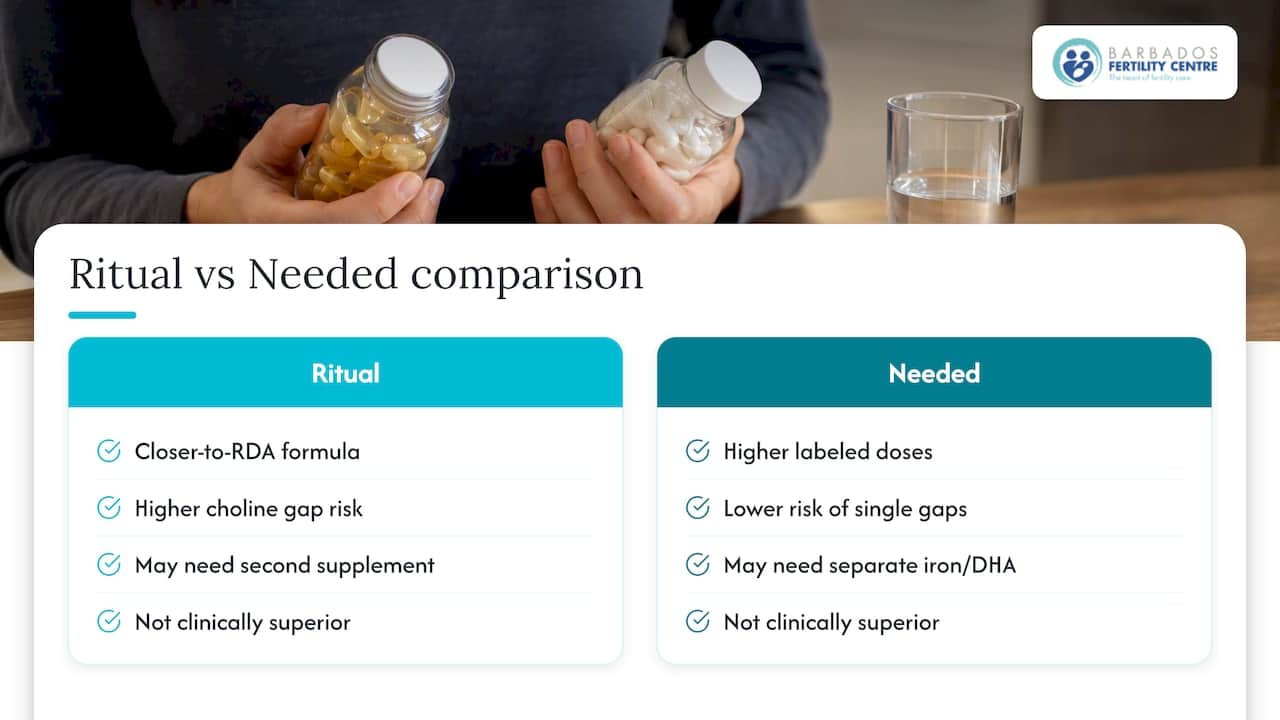
Neither approach is inherently safer or more effective in a clinical sense. The outcome that matters most, consistent daily use through the first trimester and beyond, often depends more on whether the capsule sits well with you than on which bottle has the bigger numbers. A formula you stop taking because of nausea provides none of its labeled benefits.
Safety Profile and Regulatory Standing of Each Brand
Prenatal vitamins in the United States are regulated as dietary supplements, not drugs, which means manufacturers are responsible for ensuring safety and accurate labeling, but products are not pre-approved by the FDA before they reach shelves. This applies equally to Needed Prenatal Multivitamin, Ritual Essential Prenatal, and both Perelel lines.
None of these brands’ formulas exceed the established upper limit for folic acid when taken as labeled, and all use methylfolate or a folate form dosed around or above the pregnancy RDA of 600 mcg DFE. The practical safety question is less about the brand and more about stacking: if you add a separate iron or DHA supplement to any of these multis, check the combined total against the RDA and upper limit rather than assuming more is automatically better. Always mention every supplement you are taking, prenatal or otherwise, at your prenatal visits so your clinician can flag any overlap.
When to Start and How Long to Keep Taking a Prenatal
Guidance commonly points to starting a prenatal, or at minimum a folic acid or methylfolate supplement, before conception when possible, since neural tube defect risk is tied to folate status in the earliest weeks of pregnancy, often before you know you are pregnant. If preconception timing is not possible, starting as soon as you confirm pregnancy is the next best option.
Most clinicians recommend continuing a prenatal through all three trimesters and into the postpartum period if you are breastfeeding, since nutrient demands for iron, choline, and DHA continue after delivery. This is one area where Perelel’s trimester-specific dosing is a clear fit, since the formula is designed to change as you move through pregnancy rather than asking you to switch products or add supplements at each stage. Needed and Ritual both stay consistent across trimesters, which means any dose adjustment has to come from you or your clinician rather than the product itself.
Prenatal Vitamins and Common Pregnancy Medications
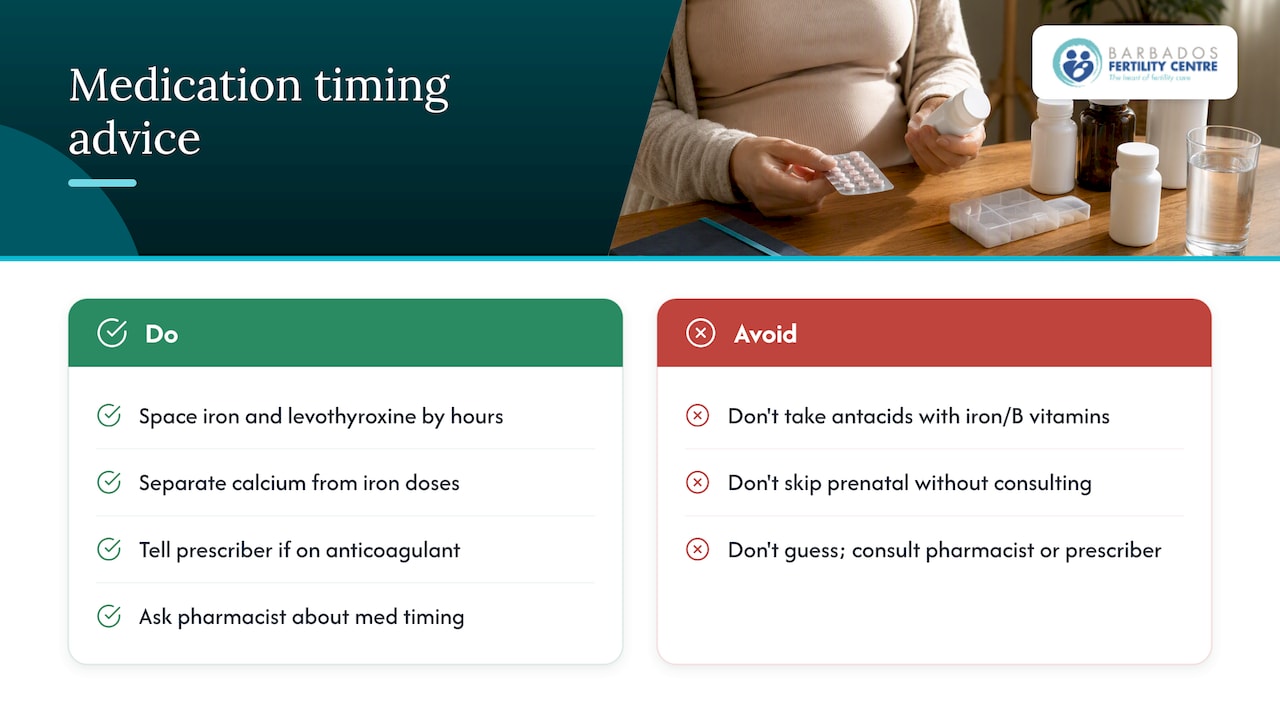
A few common medications and supplement combinations are worth flagging regardless of which prenatal you choose. Iron can reduce the absorption of thyroid medication like levothyroxine if taken too close together, so spacing them by several hours is a standard recommendation for anyone on thyroid treatment. Calcium, whether from a separate supplement or a calcium-fortified food, can similarly interfere with iron absorption when taken at the same time.
If you are on an anticoagulant or being monitored for a clotting condition, mention your prenatal’s full nutrient list to your prescriber, since some formulations include vitamin K adjacent nutrients worth tracking. Antacids and some acid-reducing medications can also affect how well you absorb iron and certain B vitamins, which matters more for a higher-dosed formula like Needed’s than for a minimalist one. None of this means you need to avoid a prenatal if you are on other medications. It means the conversation about timing and combination belongs with your pharmacist or prescriber rather than guesswork.
What Actually Matters When You Pick a Prenatal
Fewer ingredients can mean less stomach upset, but fuller dosing can mean fewer gaps left for your diet to fill alone. Neither wins outright. Prioritize what your bloodwork actually shows over what a brand’s comparison chart claims, and remember that the prenatal you will take every single day beats the one with the more impressive label that ends up back in the cabinet by week nine.
— Barbados
Getting Personalized Guidance Before and During Pregnancy
A prenatal label can only do so much without knowing your own ferritin, choline intake, or thyroid status — see more about testing during pregnancy here. At Barbados Fertility Centre, our preconception assessments pair bloodwork with individualized guidance, so your supplement choices are based on your own numbers rather than a chart.

- We review ferritin, hemoglobin, and relevant nutrient markers before you commit to a dosing strategy.
- We offer coordinated preconception and fertility care for patients planning pregnancy, including those traveling internationally for treatment.
- We price our services transparently, with IVF from $5,750 and international treatment pricing listed for patients outside our regional pricing area.
If bloodwork, a fertility assessment, or a coordinated treatment plan is part of your next step, visit our clinic page to see how we can fit into your preconception planning.
This article is general information, not a substitute for advice from a qualified doctor. Consult a qualified healthcare professional about your own circumstances before acting on anything here.
FAQ
What is the highest quality prenatal vitamin?
There is no single certified “highest quality” prenatal, since none of these brands has published independent clinical trial comparisons. The most useful measure is how closely a formula’s labeled doses match your personal nutrient gaps, which your ferritin, diet, and clinician’s guidance can help you identify.
Is Needed prenatal a good brand?
Needed Prenatal Multivitamin offers broader, higher-dosed nutrient coverage than many prenatals on the market, with iron and DHA sold separately so you can adjust each dose individually. It suits people who want fuller coverage and are willing to manage add-ons based on their own bloodwork.
Is Ritual a good prenatal for pregnancy?
Ritual Essential Prenatal works well for people with a solid baseline diet who want a smaller, more tolerable nutrient list in a delayed-release capsule. It covers core nutrients near standard pregnancy targets but may leave more of the choline and DHA gap to your diet than a higher-dosed formula would.
What are the differences between Needed prenatal and Needed prenatal Pro?
Needed markets its Pro line as a higher-dosed option within its own product family, aimed at people who want the most comprehensive coverage available from the brand. The standard Needed Prenatal Multivitamin already offers higher dosing than many competitors, so the Pro version is best understood as a further step up rather than a different nutrient strategy.
How do I know if I need a separate iron or DHA supplement?
A ferritin and hemoglobin check from your clinician is the most reliable way to know whether you need added iron, while your typical seafood or algae-based DHA intake can guide whether you need a separate DHA supplement. Bring both questions to your prenatal visit rather than guessing from a label alone.